
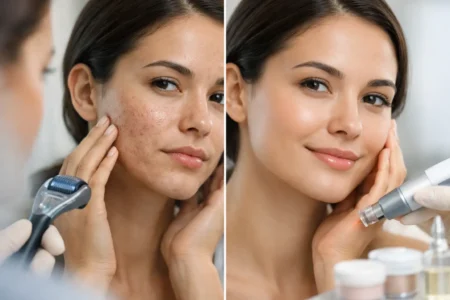
A breakout may last a week, but the reminder it leaves behind can affect how you feel for years. If you are wondering how to treat acne scarring, the answer is rarely one product or one appointment. Meaningful improvement comes from identifying the type of scar, calming any active acne, and choosing treatments that support your skin’s natural renewal process.
Acne scars are common, and they are not a reflection of how well you cared for your skin. They are simply what can happen when inflammation disrupts the collagen beneath the surface. With the right plan, many people can achieve smoother texture, more even tone, and a complexion that feels more like their own again.
What Acne Scars Are Really Telling You
Not every mark after a pimple is a true scar. Red, pink, or brown spots that remain after a blemish heals are often post-inflammatory discoloration. These marks can fade over time, especially with daily sun protection and thoughtfully selected skincare. True acne scars, however, involve a change in the skin’s texture or structure and usually require more targeted care.
Depressed scars are the most common type. Ice-pick scars are narrow and deep, boxcar scars have more defined edges, and rolling scars create a soft, uneven texture across the cheeks or jawline. Raised scars, known as hypertrophic scars or keloids, are less common on the face but may develop on the chest, shoulders, or back.
This distinction matters because a treatment that brightens lingering discoloration may do very little for deep, tethered scars. A personalized evaluation helps determine whether your concern is pigment, texture, volume loss, active breakouts, or a combination of all four.
How to Treat Acne Scarring With a Customized Plan
The most effective approach usually combines professional treatments with consistent home care. Your plan should account for your scar type, skin tone, sensitivity, history of hyperpigmentation, lifestyle, and how much downtime you can comfortably accommodate. There is no universal “best” treatment, but there are reliable options that can be matched to your goals.
Start by Controlling Active Acne
Treating scars while new breakouts are forming can feel like trying to repair a road while traffic is still damaging it. If acne is active, the first priority is reducing inflammation and preventing future blemishes that may leave additional marks.
A provider may recommend medical-grade skincare ingredients such as retinoids, salicylic acid, benzoyl peroxide, azelaic acid, or pigment-supporting formulas, depending on your skin. The right routine should be effective without stripping the barrier. Over-exfoliating, picking blemishes, or constantly changing products can prolong irritation and make discoloration more noticeable.
Use Daily Sun Protection as Your Foundation
Sunscreen is not the most glamorous part of scar treatment, but it is one of the most valuable. UV exposure can deepen post-acne discoloration and make differences in texture more apparent. Broad-spectrum SPF 30 or higher, worn every morning and reapplied when needed, helps protect the progress you are investing in.
For many clients, this simple habit also supports better healing after professional treatments. A tinted mineral sunscreen can be especially helpful for those prone to hyperpigmentation, as visible light may contribute to uneven tone for some skin types.
Consider Chemical Peels for Tone and Surface Texture
Professional chemical peels use carefully selected acids to encourage exfoliation and skin renewal. They can be an excellent choice for post-acne discoloration, dullness, mild textural irregularities, and congested skin. A series of lighter peels may offer gradual improvement with minimal downtime, while stronger peels can create more significant peeling and require a longer recovery period.
Peels are not usually enough on their own for deep ice-pick or rolling scars. Still, they can be a valuable part of a broader treatment plan, particularly when uneven color and active acne are also concerns. The formulation and strength should always be selected with your skin tone and sensitivity in mind.
Build Collagen With Microneedling
Microneedling creates controlled microchannels in the skin to stimulate collagen and elastin production. Over a series of treatments, this can help soften the appearance of shallow boxcar scars, rolling scars, enlarged pores, and uneven texture.
Because collagen remodeling takes time, results develop gradually rather than overnight. Most people need multiple sessions spaced several weeks apart, followed by a patient approach to healing. Microneedling can also be paired with platelet-rich plasma, or PRP, using growth factors from your own blood to support the skin’s repair response.
For the right candidate, radiofrequency microneedling, including treatments such as Morpheus8, adds heat energy beneath the skin’s surface. This option may be especially appealing when acne scarring is paired with laxity, rough texture, or early signs of aging. It is powerful, but it should be performed with settings and preparation appropriate for your skin.
Resurface More Deeply With CO2 Laser Treatments
Fractional CO2 laser resurfacing can be a transformative option for moderate to more pronounced acne scarring. It creates tiny treatment zones in the skin, prompting significant collagen renewal while leaving surrounding tissue intact to support healing. It can improve texture, soften scar edges, and create a more refined overall appearance.
The trade-off is downtime. Redness, swelling, peeling, and a period of diligent aftercare are expected, and recovery can take longer than with microneedling or superficial peels. Not every skin type or lifestyle is the ideal match for CO2 resurfacing. A detailed consultation is essential to weigh expected results against healing time, pigment risk, and your comfort level with a more intensive treatment.
Release Tethered Scars and Restore Lost Volume
Rolling scars sometimes remain indented because fibrous bands pull the skin downward. In these cases, collagen stimulation alone may not fully release the depression. Subcision is a technique that breaks up those bands beneath the skin, allowing the surface to lift more naturally as it heals.
Some clients also benefit from strategically placed dermal filler to support areas of volume loss and soften deeper depressions. Fillers can create a beautiful immediate refinement, but they are not permanent and may be best used alongside treatments that build your own collagen. This is a highly individualized decision based on scar pattern, facial anatomy, and your desired level of maintenance.
What Results Can You Realistically Expect?
Acne scar treatment is about improvement, not erasing every trace of your skin’s history. The goal is often to make scars less visible in normal lighting, help makeup apply more smoothly, and restore confidence when you look in the mirror without filtering or covering.
Most clients see the best change through a series of treatments, not a single session. Collagen continues to remodel for months after microneedling, radiofrequency treatments, or laser resurfacing, which means your results may continue to evolve. Before-and-after photos taken in consistent lighting can be far more helpful than checking your skin every day.
Your healing habits matter, too. Follow aftercare instructions closely, avoid picking or exfoliating before the skin is ready, stay consistent with sunscreen, and let your provider know about any history of cold sores, keloids, melasma, or medication changes. These details help create a safer, more effective plan.
When It Is Time for Professional Guidance
Over-the-counter skincare can support clearer, healthier-looking skin, but it cannot always reach the structural changes beneath a scar. If acne scarring affects your confidence, makeup routine, or comfort in photos, a professional assessment can bring clarity to what will actually make a difference.
At Shine Medspa, treatment planning begins with your skin, your goals, and the level of downtime that fits your life. Whether you need a gentle path toward brighter, smoother skin or an advanced combination approach for deeper scars, the right care should feel informed, supportive, and designed around you.
Your skin does not need to be perfect to be beautiful. It deserves a plan that respects where it has been and helps you feel confident in where it is going.

